AI speed without AI risk: why governance is the real bottleneck
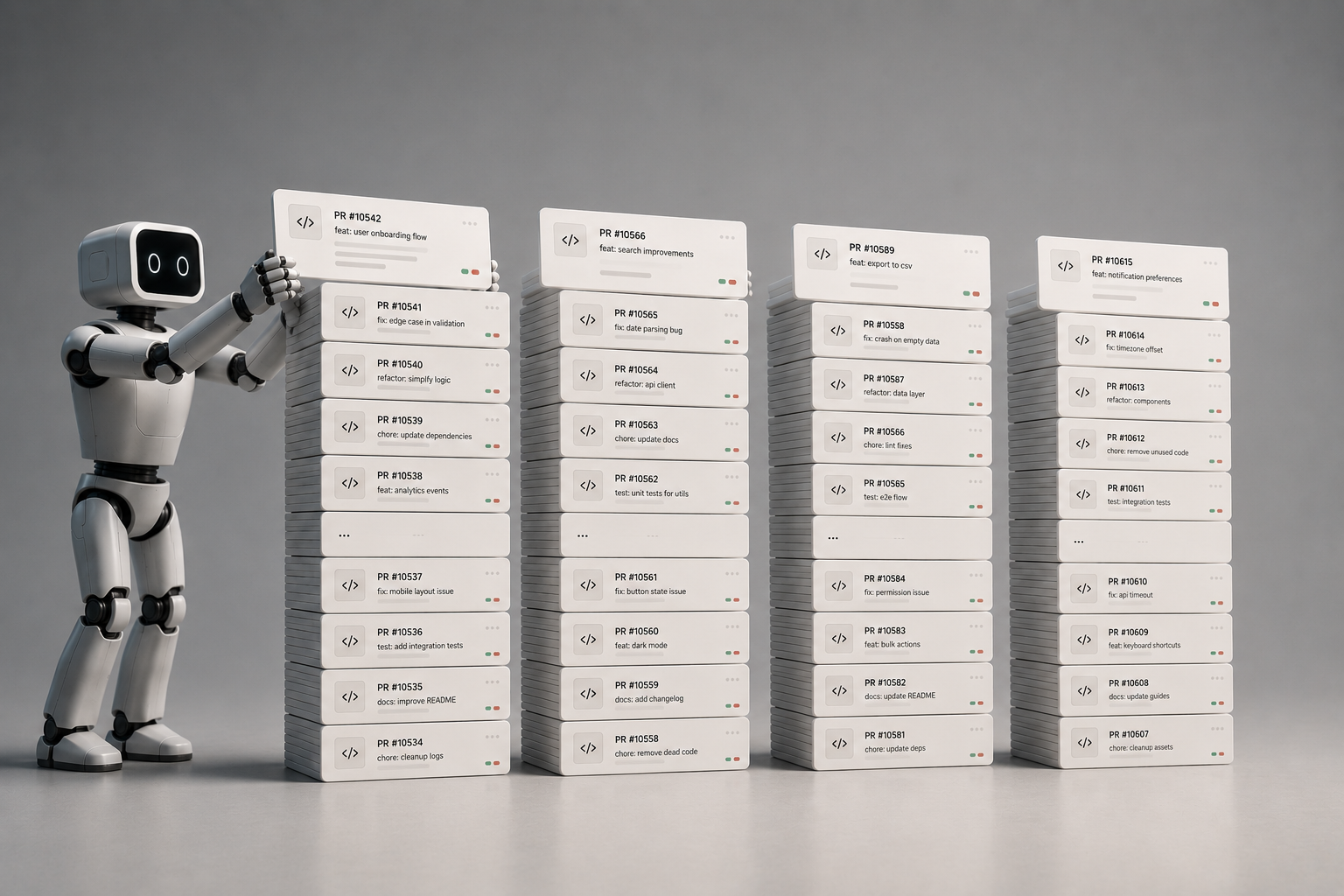
The whole industry agreed on the AI story a little too fast.
Ship quicker, generate more, burn down the backlog, point an agent at the repo and watch the PRs pile up. Speed, speed, speed, as if the only thing standing between you and a shipped roadmap was raw output.
Here's the part nobody says out loud: speed was never the hard part.
It wasn't hard before AI and it definitely isn't now, because anyone can produce code fast today. Your junior can, a model can, and a well-prompted agent can write a feature before you've finished your coffee.
Producing code was never the bottleneck. Trusting it is.
The gap nobody's staffing
Think about what actually happens when you turn AI loose on a codebase.
It generates faster than any human can read, way faster, so you get a firehose of output and a team that can review maybe a garden hose of it per day. The rest just goes in, merged on vibes and shipped on faith.
That gap, between what got produced and what someone actually verified, is where AI delivery quietly breaks.
You've seen the symptoms even if you haven't named them:
- The feature that worked flawlessly in the demo and fell apart the second real users touched it.
- The PR that got a "👍" and a merge because it was 400 lines at 6pm on a Friday and nobody had the energy.
- The "we'll clean it up later" that is now load-bearing.
- The codebase your team inherited and now maintains like archaeologists, poking at code no living person understands.
None of that is a speed problem, because you were plenty fast. That's a trust problem, and it doesn't show up on the day you ship. It shows up three months later, with your name on the commit history.
Going faster makes it worse
Here's the counterintuitive bit that should keep you up at night.
Without a way to trust the output, more AI speed doesn't get you more value, it gets you more liability, faster.
You're not compounding features, you're compounding unreviewed decisions. Each one is a small unpaid debt, and AI lets you take on that debt at a rate no human team ever could. It feels like acceleration, but it's actually leverage, and leverage cuts both ways.
The teams that "went all-in on AI" and then went suspiciously quiet? This is usually what happened. They optimized the one number that was never the constraint, and the bill came due somewhere south of production.
So what is governance, actually
Say "governance" to an engineer and they picture a committee, a Jira workflow with nine states, some VP asking for a deck. Something slow, something that gets in the way.
Wrong picture. That's bureaucracy, and governance is the opposite: it's the thing that lets you move without looking over your shoulder.
Stripped of the jargon, it's four boring, unglamorous mechanics.
- Every merge earns its way in. Typed, tested, documented and reviewed before it touches your main branch. Not "usually," every time, as a gate rather than a vibe.
- A human owns every decision the AI touches. The agent can write it, but a senior is accountable for it, and that's the whole game. AI accelerates and a person owns, so the moment nobody owns the output you don't have a delivery system, you have a very fast way to generate regret.
- You can see all of it. What shipped, who reviewed it, what's covered, what's still soft, and not because you chased someone for a status update but because the system just shows you.
- It stays yours. Your code, your IP, documented well enough that your team can run it after everyone else goes home.
That's it. No committee, no ceremony, just a standard applied every single time, by design instead of by hope.
The reframe: governance is the speed
Now the twist. Governance isn't the tax you pay to go slower, it's the thing that lets you stay fast.
When risk is handled in the background, with every merge gated and every decision owned and everything visible, you don't have to stop and audit. You don't get the Q3 slowdown where the whole team drops everything to firefight the mess Q2 shipped, you just keep moving, at AI speed, because the part that usually forces you to hit the brakes is already covered.
The teams without governance feel fast for exactly one quarter, and then they spend the next two paying it back. The teams with it look slower on day one and are still shipping, cleanly, on day ninety.
Speed without control isn't delivery, it's just motion. And motion, unlike delivery, doesn't care which direction it's going.
The actual question
So no, the question isn't whether you should use AI to build software, because that debate's already over and everyone's in. And if your competitor somehow isn't yet, they will be by the time you finish reading this.
The real question is quieter, and it's the one worth asking in your next planning meeting:
When the AI ships something, does anyone own it?
If the answer is "sort of," you don't have an AI problem, you have a governance one. And that's the good news, because that one's solvable.
Not sure where your situation fits?
Talk to our AI Architect. It'll assess your situation and tell you what makes sense — even if that's not Bowery.